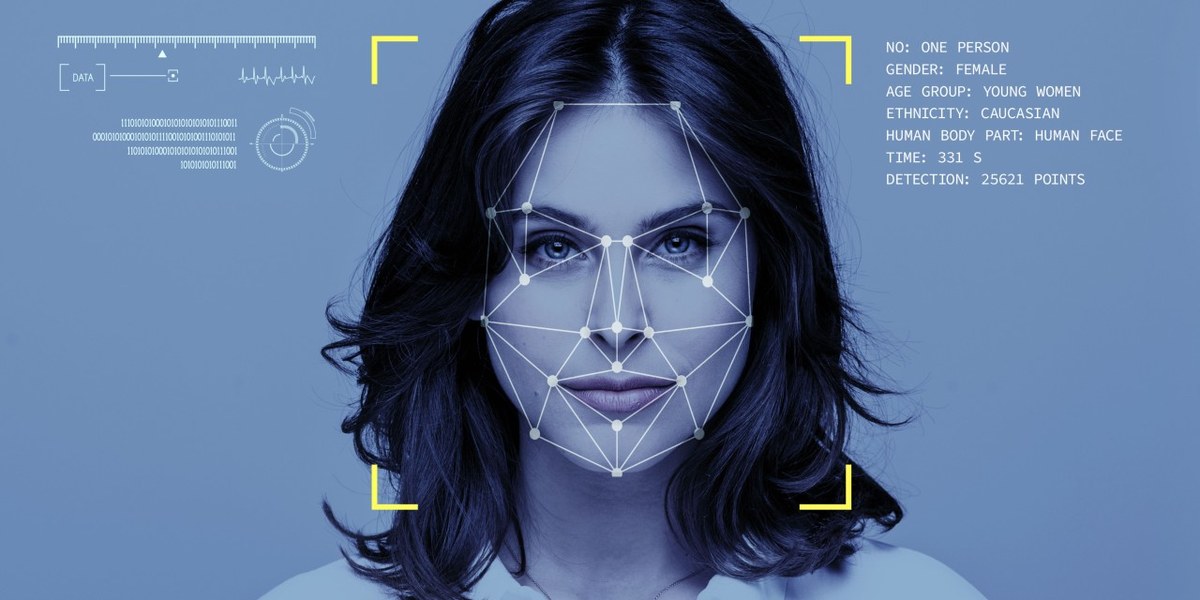
*Update, November 2026:** Since this article was written in 2023, live facial recognition has expanded rapidly across the UK, including permanent cameras piloted in Croydon and government funding for more police camera vans. This month, the Home Office set out plans for a dedicated law governing police use, an independent watchdog, and a separate code for private-sector users such as shops. The questions raised below matter more now than when they were first asked.
How government and retail cost cutting is pushing Britain towards greater mass surveillance.
The Shoplifting Epidemic: Fact or Fiction?
2023 has seen a significant number of shoplifting stories in the media.
Many of the UK’s leading retailers are sounding the alarm on a crime wave sweeping the nation - shoplifting. Things are so bad the Co-operative has warned of no-go areas in the UK, John Lewis Partnership is calling for tougher legislation to prosecute criminals and Tesco has started issuing its employees with body cameras.
The announcements paint a grim picture of a ‘shoplifting epidemic’ in which stores have turned into battlegrounds and feral TikTok yobs roam our high streets. Britain is on the verge of anarchy!
It’s easy to be swept up by fear and to demand more stringent measures, but how much of this fear is grounded in reality?
At first glance, the statistics seem to clearly indicate a significant increase in shoplifting. The most quoted data used in the media comes from the UK’s retail industry spokesperson, the British Retail Consortium (BRC). Its last annual Crime Survey reported incidents of shoplifting rose from 2.9m in 2017/18 to a staggering 7.9m in 2021/22. As a result, £1 billion was lost to theft in 2021/22.
But another stat in the same BRC report covering the same period - not mentioned as much in media coverage - points out the amount spent on crime prevention by UK high street retailers decreased from £1bn in 2017/18 to £722m in 2021/22. Additionally, police data reported by the BBC shows actual levels of shoplifting have reverted to pre-pandemic levels.
Of course, shoplifting data is difficult to calculate accurately and many retailers have simply stopped reporting thefts to the police because the police have de-prioritised shoplifting and thefts of less than £200 are not pursued.
Modern technology is also a contributing factor. There’s been a substantial increase in the number of self-service checkouts and a reduction of retail employees on shop floors. According to a 'Global Study on Self Checkout in Retail 2022’ by the University of Leicester, 96% of grocery respondents and 77% of non-grocery respondents deployed self-checkout systems in 2022. The global retailers surveyed estimated that self-service systems accounted for 23% of retail unknown store losses, and 48% of malicious losses.
So, what are retailers planning to do next? Apparently, more cost effective technology.
Facial Recognition - Unlawful and Without Parliament's Approval
Several retailers that have issued shoplifting warnings this year have joined forces with the police to initiate Project Pegasus. The collaboration will allow retailers to cross-reference images of suspected shoplifters against a Police National Database, which incorporates facial recognition technology.
This 'retrospective' facial recognition enables the police to scan retail CCTV against their database of suspects. The justification for Project Pegasus is, of course, the supposed ‘shoplifting epidemic’.
The use of live facial recognition (LFR) has been growing in the UK since 2020, despite the fact that UK judges have previously deemed it unlawful. The tech has been deployed across our streets, public areas and events such as the Notting Hill Carnival, even the King’s Coronation.
All the images and biometric data have been collected without public consent and even without Parliamentary debate or approval. And of course, there are also concerns about racial bias, which the police refute.
More concerning is the possibility of even more surveillance technology being deployed.
Earlier this year, reports emerged that the UK Home Office covertly backed the rollout of facial recognition cameras in collaboration with the British company Facewatch. Chris Philp, Minister of State for Crime, agreed to lobby the Information Commissioner's Office (ICO) on behalf of Facewatch, in an attempt to expedite the rollout of their controversial tech.
Facewatch has worked with retailers such as Co-operative for years but the legality of its technology has been challenged by civil rights organisations. Despite these concerns, some UK retailers seem determined to press ahead.
One such retailer is Ruxley Manor Garden Centre, whose CEO proudly claimed in an interview with the Guardian that the technology had prevented a 70-year-old pensioner from stealing £15 of toys for her granddaughter. And the result of Ruxley Manor scanning the images of every customer entering their stores? One recorded criminal prosecution.
UK Versus EU Regulation
The UK government’s new Data Protection Bill proposes to abolish the role of the Biometrics Commissioner and its requirement for a surveillance camera code of practice. The Commissioner, Professor Fraser Sampson, expressed his serious reservations about this and subsequently resigned.
The Metropolitan Police Commissioner, Sir Mark Rowley, feels facial recognition is necessary to make up for cuts to police funding. 'I have 28% less to spend on policing London in real terms per capita than we had a decade ago.'
He also compares the deployment of facial recognition with the roll out of DNA thirty years ago. A bizarre comparison given DNA is only taken from suspects during serious criminal investigations, whereas facial recognition scans anyone within its range without consent or even public knowledge in most cases.
The UK’s move towards greater surveillance is in stark contrast with the EU, which is passing AI legislation that includes a ban on biometric identification in public spaces. Is the UK such a failed state that we alone require more pervasive facial recognition while the rest of Europe does not?
Civil Liberties
Clearly, shoplifting is a multifaceted and intricate issue, with government cuts to law enforcement and retail cost-cutting in favour of cheaper technological solutions being part of the problem. Rushing to implement dystopian mass surveillance tools at the expense of civil liberties is not a price worth paying.
The prospect of our United Kingdom, the land of Orwell, allowing greater use of such pernicious technology should concern us all.
Whatever the true extent of the ‘shoplifting epidemic’, ultimately I agree with Liberty:
'We all have the right to go about our lives freely, without being scanned and monitored, but expanding the use of facial recognition will invade our privacy and violate our rights.'